

Fusaki Iida @fusakidmk
The Hidden Dangers Behind Japan’s World-Famous Powder Snow
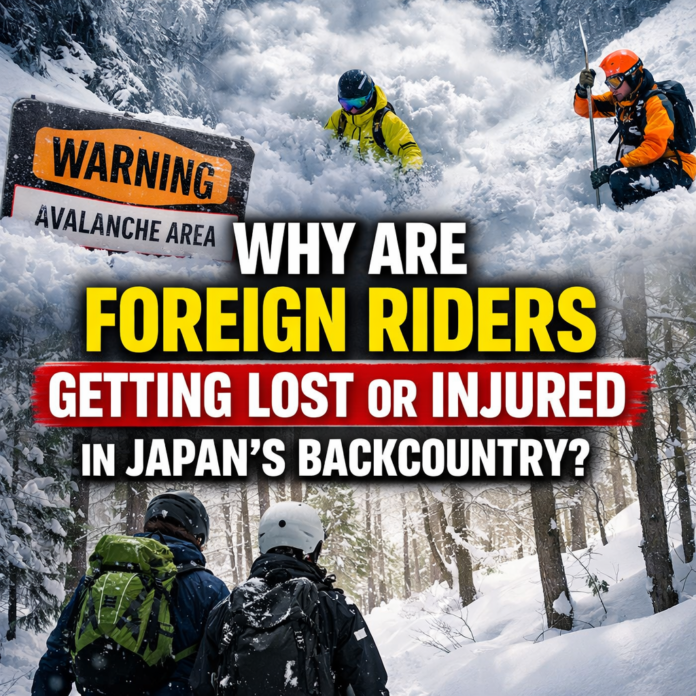
Accidents involving foreign visitors in Japan’s winter mountains — especially in backcountry areas — have been occurring one after another.
This is not a coincidence. Behind these incidents lie Japan’s unique snow conditions, complex terrain, and hidden risks that are often difficult for outsiders to recognize.
In January 2026, in Hakuba, Nagano Prefecture, two American backcountry skiers were caught in an avalanche.
The male skier managed to descend safely, but the female skier remains missing.
In recent years, I have seen more and more people around me travel to Japan in search of their dream “Japow.”
However, contrary to Japan’s reputation as a safe country, its winter mountains can be far more dangerous than many expect.
That is why I strongly urge anyone heading into Japan’s backcountry to prepare thoroughly, understand the risks, and proceed with extreme caution.
Nearly Half of Backcountry Rescue Cases Involve Foreigners
According to Nagano Prefecture and local police, there were 67 winter mountain rescue cases last season.
Of those, 30 occurred in backcountry terrain, and 14 involved foreign nationals — nearly half of all backcountry incidents.
These numbers are the highest recorded in the past five seasons.
Reason 1: Japan’s Snow and Terrain Are Exceptionally Unique
Japan’s powder snow — often called “Japow” — is famous worldwide.
However, it comes with conditions that many foreign riders are not accustomed to:
- Extremely light and deep snow
- Rapid changes in terrain after heavy snowfall
- Dense tree zones and narrow valleys
- Poor visibility during storms
Even experienced backcountry riders from overseas often underestimate how quickly situations can change in Japanese mountains.
Reason 2: “Just Outside the Resort” Is Not Safe Terrain
One of the most common causes of accidents is the assumption that terrain near ski resorts is controlled or managed.
In Japan:
- Areas outside resort boundaries are completely unmanaged
- There is no avalanche control
- No ski patrol or immediate rescue support
A short hike or a quick drop outside the ropes can place riders in serious danger.
Reason 3: Critical Safety Information Is Often Only in Japanese
Avalanche warnings, hazard maps, and past accident reports are frequently published only in Japanese.
As a result, many foreign visitors are unaware of:
- Local danger zones
- Common route-finding mistakes
- Areas known for avalanches or “no return” terrain
This information gap significantly increases risk.
Reason 4: It’s Not About Skill — It’s About Local Understanding
Many foreign riders involved in accidents are not beginners.
They often have:
- Backcountry experience in their home countries
- Avalanche training
- Proper equipment
The issue is a lack of experience specifically in Japan’s snowpack, terrain, and weather patterns.
Reason 5: Social Media Creates a False Sense of Safety
Japan is often portrayed online as a “safe powder paradise.”
Deep snow looks forgiving — but deep snow can also trap, immobilize, or hide dangerous terrain features.
What looks playful on screen can become deadly in real conditions.
Authorities Urge Preparation and Responsibility
In response, local governments and police have begun safety awareness campaigns targeting foreign visitors, urging them to:
- Carry avalanche beacons, shovels, and probes at all times
- Submit route plans before entering the mountains
- Understand that backcountry travel is entirely self-responsible
One official stated:
“We are seeing more cases of riders getting lost. Please enjoy the mountains safely — and make sure you return.”
Backcountry Freedom Comes With Responsibility
Japan’s backcountry offers incredible experiences, but it is not forgiving of mistakes.
Before you ride:
- Learn local conditions
- Respect unmanaged terrain
- Prepare properly
- And know when to turn back
The question is not why Japan’s powder is so attractive —
but why its dangers are still being underestimated.
(News footage related to recent foreign backcountry accidents will be shown below.)
This morning at Nagano Station, officials conducted a winter mountain safety awareness campaign for foreign visitors.
Travelers waiting for buses to Hakuba and surrounding areas were advised to check their equipment and submit mountain route plans before heading into the backcountry.
Last winter, there were 67 mountain rescue cases in Nagano Prefecture.
Of these, 30 involved backcountry terrain, and 14 of those were foreign visitors — the highest number in the past five seasons.
Earlier this month, on January 2nd, two American backcountry skiers were caught in an avalanche in Hakuba.
The male skier descended safely, but the female skier remains missing.
Authorities emphasized that backcountry areas carry high risks of avalanches and getting lost.
They strongly recommend carrying a beacon, shovel, and probe, and urged all visitors to enjoy the mountains safely and make sure to return.